Saturday, May 12, 2012

You Have No Idea

 
    You Have No Idea, is a book just out by Vanessa Williams and her mother, Helen Williams. It sent me to my archives for this piece I wrote for Right On/CLASS magazine about Vanessa's first official appearance as Miss America, 1984. Vanessa, just twenty years old at the time, told me that determination was what she most admired about herself.  No doubt that's what drove her to keep going when an early nude photo of her surfaced and she lost her crown in the ensuing scandal.  The character trait she drew on when dealing  with other personal and professional ups and downs over the years. 
    Much has changed in the culture since Vanessa Williams' win in 1984. But determination may be something we need now more than ever. What do you think?


Wednesday, June 8, 2011

Story, Story, Story


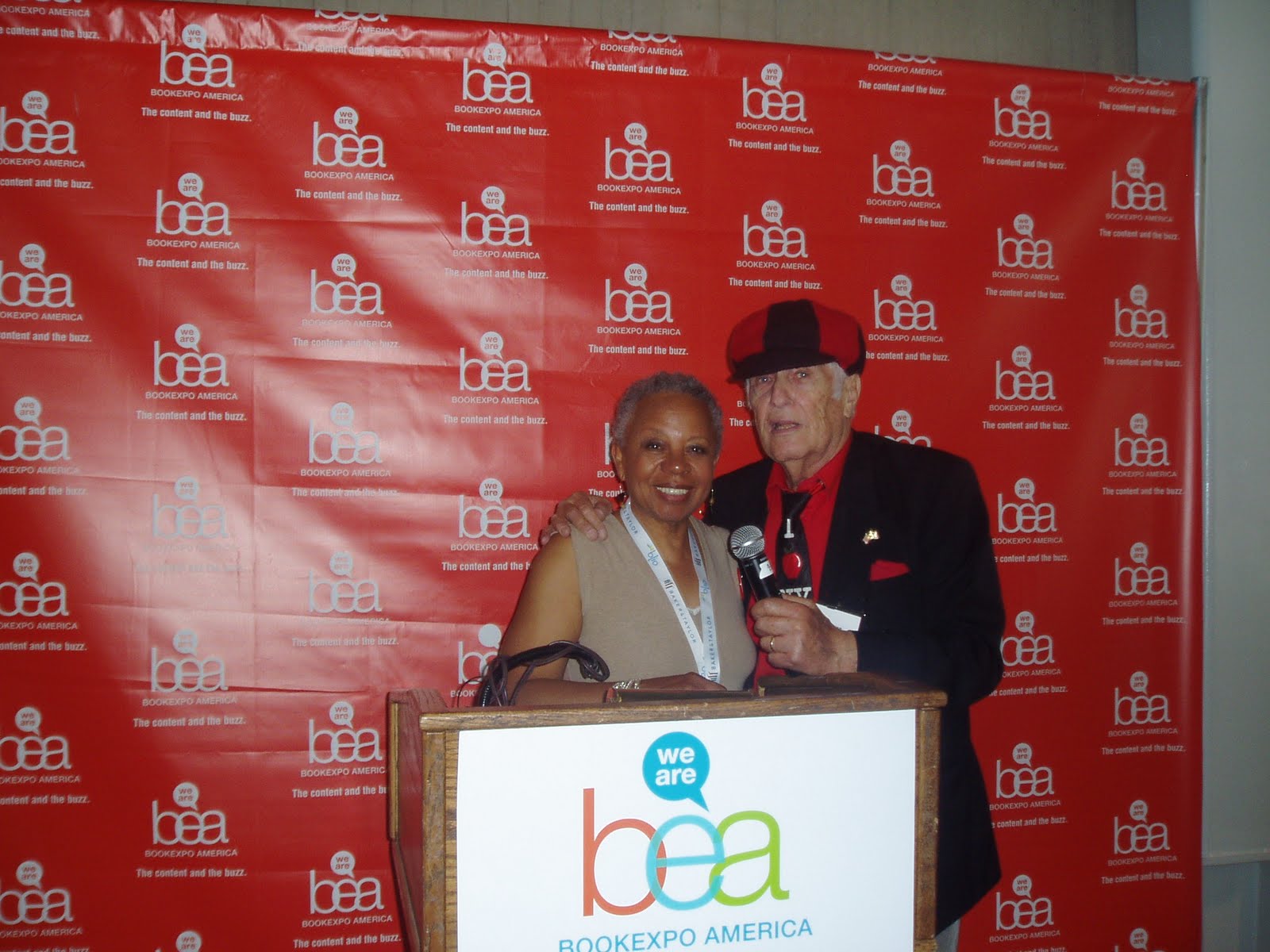
It’s all about the story. That’s the message I heard repeated like a mantra at BookExpoAmerica (BEA) and Blogworld & New Media Expo NY, the huge happening for all things book-related held May
24-26 at New York’s Javits Center.
Publishers, book sellers, authors and some top notch workshop leaders (an estimated 20,000 total attendees) had a lot to say. Michael Margolis broke the storytelling message down most convincingly. His presentation on how to recognize and tell your own story in a way that makes you known and gives value to the reader was full of good info for creating your author, blogger or website bio. http://www.getstoried.com/ and Michael@getstoried.com
I needed no convincing about the importance of story. Back in the day, when Eyewitness News changed the face and presentation of local television news nationwide, I was a general assignment reporter and anchor and had the chance to experience the power of persuasive storytelling first hand. The concept was revolutionary for the news biz then and still resonates despite people who confuse the concept of first hand storytelling with “happy talk” tv news.
When not talking story, folks weighed in on the explosive growth of e-book sales and e-book reading devices. Or debated the pros (mostly) and cons (not many) of social media, a subject about which everybody I met had an opinion. Gary Vaynerchuk, author of The Thank You Economy, takes exception to the term “social media.” More than media, he says that term attempts to describe a cultural shift in the way we use the Internet. http://www.garyvaynerchuk.com/
Malloy book publisher’s exhibit caught my eye http://www.malloy.com/ and Stephanie Barker steph_barker@malloy.com was quick with answers to my questions about self-publishing and books-on-demand.
Thanks to Sandra Lee Schubert http://www.wildwomannetwork.com/, blog radio host, social media strategist and a friend who goes way back with me, I made the most of my time. A veteran of past BEA conferences , she guided me through the myriad of exhibits and workshops, so many they made my head spin.
Finally, think on this: there are 18 million creative writers today who want to reach 65 million consumers who spend five hours a week reading in a rapidly shifting storytelling environment.

Wednesday, January 12, 2011

Remembering Gordon


I’m thinking about Gordon Parks a lot lately because his birthday just passed at the end of November. He would have been 98. Another reason he’s been on my mind, I just recently spent three nights in a row in bed with his novel “The Sun Stalker.”

“The Sun Stalker” is so good, the story held me in its grip both as a reader and a writer. The main character is JMW Turner, the British landscape painter (1775-1851) whose achievements in art have been compared to Shakespeare’s in the realm of literature. It is simply breathtaking to witness how he renders the glare of the sun over land and water, and captures atmosphere and light in his seascapes and in his historical and mythological subjects. Turner was also a prolific artist, producing more than 20,000 paintings and drawings in his 60-year career.

Gordon Parks, possibly the most famous of Life magazine photographers, once told me that Turner had been an important influence in his own work. Turner was also an inspiration to the Scottish poet, Harry Craig, who said he once saw a Parks photograph in an exhibition that immediately reminded him of Turner’s painting, A Storm at Sea.

Together, the photographer and the poet tried to interest Hollywood in a movie about Turner’s life and work. But they got nowhere. One producer even nixed the idea, mistaking Turner the painter, with Nat Turner, leader of a slave rebellion and subject of a novel by William Styron. Before his death, poet Craig made Gordon promise to keep pursuing their movie idea. Though the movie never materialized, the idea morphed into Gordon’s novel.

In his handling of “The Sun Stalker”, Gordon is a cinematic story teller. He sometimes cuts from one scene to another in the way a movie director might film them. And no wonder. Gordon Parks was a filmmaker in addition to his many other talents: poet, composer, musician, memoirist, documentary maker.

Gordon, a black American man, was born into a harsh life on the Kansas prairie just 12 years into the 20th century, and details of his life are well known. By contrast, details of Turner’s real life remain mostly a mystery beyond the fact that he was the son of a London wigmaker. Despite their differences, the two artists had in common their rich imaginations and their keen observations of the telling details.

That Gordon could so fully imagine the trials and triumphs of a painting prodigy, make believable the people, places and events he might have experienced, and transport the readers to that other time and place and hold them there reveals a fabulous story teller at work. It’s what I think we all hope for as writers and readers. I know I do. I’m so grateful to Gordon Parks for leaving the legacy of his inspiring words and pictures.

Monday, September 6, 2010

The Race

I don’t know anyone whose life hasn’t been touched by breast cancer---either up close or at a distance. And, whether we recognize it or not, we are all in the struggle to come up with a cure.

I say this because we sometimes take actions unconsciously---not thinking about the consequences.

For instance, when we buy certain products, everything from greeting cards to cars to yogurt, part of the purchase price may be going to help fund breast cancer research, education and support services. We may be donating without even realizing it, not doing so consciously and deliberately.

I have lost people who were the closest to me---relatives and friends-- to breast cancer. And I have some who are breast cancer survivors. With the disease striking so close to me, I grow fearful every year as the date approaches for my annual mammogram and breast exam. There have been times when I let the date pass, postpone it ‘til I can’t ignore the voice asking me about my fear and assuring me that I can face it down.

I’m lucky and I know it. I have seen the same wise and wonderful radiologist, Dr. Gail Phillips, for the last 15 years or so. We met when I worked for News 12 Long Island at a time when activists in the area were searching for clues to why breast cancer incidence seemed unusually high in their communities.

Dr. Phillips goes over my x-rays with me, calmly pointing out the tiny calcifications present in my breast tissue. She explains why some look suspicious and others don’t. When she thought biopsies were called for, I had them. About three times. Each time they have come back negative. Dr. Phillips is as relieved as I am when after she reviews my mammogram, she can say, “OK, Melba, everything’s fine.” I return to the changing room grateful, grateful, grateful.

So, I’m thinking that when the Komen NYC Race for the Cure sets off in Central Park on Sunday, September 12, I will consciously, deliberately make my gratitude manifest. Give some bucks and put on my walking shoes. (I’m not a runner).

REGISTER AT KOMENNYC.ORG/RACE

Wednesday, September 1, 2010

STRINGS ATTACHED


Last Friday, August 27, was one of those “You should have been there” evenings. There was Trenton, NJ. Not a place I especially associate with extraordinary violinists or out-of-this-world modern dance. Just goes to show how wrong some assumptions can be.

The occasion was a fundraising held in the War Memorial/Patriots Theater, an architecturally stately building that surely has its own story to tell. On this night, a ballroom full of peaceful patriots turned out to give financial and moral support to The Conservancy (NJ). The Conservancy (NJ)is both a place and a dream. It is becoming a center where young people and artists come together for learning and teaching. Think of art in the broadest sense of the word and you’ll be in tune with Sterick and Jacqui Ivey. They are the driving force in resurrecting the historic Trenton Conservatory of Music--where young Jacqui Ivey took piano lessons-- as The Conservancy (NJ). They envision a place where children engage in all sorts of artistic expressions from cooking to drumming. "There’s a lot of talent in Trenton” she says. Given the current cutbacks in public school art programs, Jacqui Ivey feels the need is urgent, and she is determined to nourish young talent while promoting local artists and arts events in the process.

The benefit performances were stunning, with The Wesley Drears Duo, Dancespora and the Scott Tixier Group taking turns on stage. Scott, just 24 yrs old, is an amazing jazz violinist (with a ‘fro that won’t quit). A native of France who now calls Brooklyn home, Tixier is winning kudos within New York’s jazz musician community.
His energy and virtuosity got me thinking about the late Noel Pointer,the brilliant jazz violinist,record producer and social activist who I admired and once interviewed. Pointer, also a Brooklynite, died of a stroke in '94 just before he would have turned 40. As an activist, he led fellow artists in raising public awareness around the controversial dismantling of the African Burial Grounds in lower Manhattan. His legacy also includes a foundation and a music school. Empowering Children One Note At A Time was the mission of Noel Pointer. I am inspired and feel the thread of our human connectedness when I see people like Scott Tixier and Eric Thomas, a Trenton elementary school teacher,---and others--joining with the Iveys in that same spirit and commitment.Check out the web info on Scott Tixier and Noel Pointer. And learn more about the Iveys work: www.theconservatorynj.com
href="http://www.theconservatorynj.com/">http://www.theconservatorynj.com/) .


Saturday, August 14, 2010

For The Record


Stuff happens on the Internet sometimes that makes me wonder. Case in point: A photo of me turned up in someone’s blog post and beneath the picture is this line: “1971 Nightly News.” Problem is that image (which I was never crazy about because it looks like I borrowed my hairstyle from Albert Einstein or Don King) was shot last year, not 29-years ago as that line suggests. Also, Nightly News is the title of NBC’s network news program. I was never associated with it though I did work at WNBC-TV, the local station, for 5 years. There is a difference.
(You’ll find a link to the blog in question at the end of this.)

That said, I appreciate the blogger’s mention of me. But I disagree with the commentary describing the back-and-forth about natural versus permed or weaved hair as a debate. In my opinion it’s not a debate at all. More like people in media looking to stir up controversy on a slow news day, aided and abetted by fearful folks who think their way is the only way. And when you throw in Chris Rock and his movie, you’ve got distraction posing as a documentary fronted by a comedian who seemed to be in over his head trying to be funny (or is it serious?) about black women and their hair.

Real dialogue, on the other hand, is what occurred at last year’s Heads Up! A Soulful Celebration of Our HAIRitage. This program at Brooklyn’s Kumble Theatre was an invitation to “talk, laugh and be fearlessly tender-headed.” It featured an academic, a filmmaker, and an environmentalist joined by writers, hair care entrepreneurs, musicians and performers who engaged in a grown-up, thoughtful and multi-layered look at issues, implications and assumptions related to our hair. No name calling. No finger pointing. No taking sides about whose hair is better than anyone else’s. A standing-room-only audience walked away with plenty of food for thought.

In her commentary, the blogger asks, “What has hair to do with advancing our people or solving any of the societal ills black people are facing today?” I think whenever our hair prompts dialogue that gives us insights into these conditions, it’s a good thing. Whenever discussions about our hair opens doors for developing strategies to resist self-limiting ideas, it’s a good thing. Whenever reasoning about our hair helps us dismantle the insidious notion that being black is some kind of disability, rather than a gift, it’s a good thing.

So, I say let enlightened discussions continue. We’ll be doing our part on September 29th 2010 when we present the next edition of Heads Up! A Soulful Celebration of Our HAIRitage.

Stay tuned.


Monday, July 19, 2010

The Decision


Ohioans love their sports. I know because I grew up in Akron, Ohio where the zeal for basketball and football was almost a religion---and still is. Where sports at all levels---high school, college and the pros ---attract high energy fans
.
Sell-out crowds used to jam South High School’s gym (my alma mater), and Central Hower High’s, too, in basketball season. Those same folks could be counted on to fill Akron’s Rubber Bowl for football games. And it was a source of pride in Akron that the Cleveland Browns football team ---and their future Hall-of-Famer, Jim Brown--- sometimes used our stadium as their practice field.
Those were the days when Akron owned the title “Rubber Capital of the World. “ That reputation died a while back. But my hometown is still where the Soap Box Derby is run, going back to 1935.

And baseball? Back in the day, my family rooted for the Cleveland Indians and as a kid I got to watch Satchel Page, Larry Doby, Lou Boudreau and other legends in action. We went nuts when Cleveland won the World Series in ‘48.

So why am I reminiscing about the good old glory days of Akron and Cleveland sports? All these thoughts came flooding back as I followed reports about The Decision, that cliffhanger starring Lebron James.

The news in a nutshell: Lebron, basketball super-star who was born, raised and grew his basketball greatness in Akron, chose to exercise his free-agent option and exchange his Cleveland Cavaliers uniform for one from the Miami Heat. It’s worth mentioning here that long before the Cavs drafted Lebron right out of high school, Gus Johnson and Nate Thurman---both of them Akronites, had already preceded him into the National Basketball Association and made their homies proud.

Considering Lebron’s roots , I wasn’t surprised that he broke a lot of hearts when he announced he was hitting the highway and taking his talents to South Beach.

And I shouldn’t have been surprised that The Decision generated so much hoopla, hyperbole and yes, hypocrisy. But from the reaction, you’d have thought Lebron was ditching America to go join the Taliban in Afghanistan.

For years, sportswriters couldn't heap enough praise on Lebron, starting while he was still in high school. Basketball fans far and wide compared him to Michael and Kobe. After the Cavs drafted him, giant size Lebron billboards sprouted around Cleveland’s Q arena and local fans gobbled up seasons tickets to watch him. Anybody selling anything Cavaliers-related loved them some Lebron.

But once The Chosen One made his choice, those folks turned on him. Some of the hotheads even set their Lebron number 23 jerseys on fire, motivated perhaps by a nasty open letter from the Cavs owner in which he called Lebron everything but a child of God.


In what looked to me like a rationalization of their irrational reactions, some of Lebron’s critics said it wasn’t his departure that turned them off, but his “process” and The Decision, ESPN’s ridiculously hyped-to-the heavens television show that turned them off. They claimed that breaking the news in a cable tv "special" televised live to an audience of 10 million viewers was nothing more than a sorry display of Lebron’s massive ego.

By most assessments, The Decision was hands down the most lame tv show in history. I agree. But why blame Lebron for ESPN's ineptitude? The cable network produced and aired the show, not Lebron. It’s not his fault that ESPN padded the first half of the "special"with 4 sportscasters sitting around asking each other "What do you think Lebron's gonna do?" As if at least one of them hadn't already had that question answered by one of his "sources".


Sure, Lebron agreed to do the show, but the guy was only using and being used by the same media folks that built the pedestal he’s now standing on. They had more than a hand in making him the over-the-top super-celebrity that he has become. A mega celeb who can keep people talking and wondering "What do you think Lebron's gonna do?" for the better part of the last NBA season.


Sports columnists, experts and commentators on radio and tv fed off of Lebron speculation for months leading up to The Decision. The hype leached into most of medialand, even reaching supposedly serious news pograms.

Now, many of these same folks are among the name-callers and the critics who talk about hype and the media as if they themselves are not part of the celebrity-making process, the ones that helped turn a kid with a talent for basketball into the greatest thing since sliced bread. The media, the NBA, the marketers, the Cavaliers owners and organization---and not least of all, the fans----crowned King James---and now they're pissed because he's acting the part and speaking of himself in the third person.


The fans and the Cavs organization now damming Lebron ought to be thankful. He did, after all, give the Cavs 7 good years, led them to the NBA finals in 2007, to the best record in the league in the last 2 years, into the playoffs 5 times, to say nothing of putting Cleveland and Akron in the spotlight and back on the sportsworld map.


As for The Decision to change employers, according to Labor Department statistics, Americans aged 18 to 38 will change jobs 10 times in a lifetime. That gives Lebron 9 more times to move his talents to another workplace. It’s time to cut the guy some slack.