Tuesday, July 30, 2013

Stepping Into A New Role


0
comments

Greater Lehigh Valley Writers Group offers support, networking to local writers

greater lehigh valley writers group member talk
Fiction writer and GLVWG member Phil Giunta, left, discusses writing with Webmaster Bart Palamaro, President Melba Tolliver and other members July 20 at a brunch hosted by Friends of the Bangor Library at Bangor Public Library. (Express-Times Photo | Stephen Flood)
Jenelle JanciBy Jenelle Janci 
on July 27, 2013 at 6:06 AM, updated July 29, 2013 at 3:33 PM
Email
Above the desk of Melba Tolliver, president of Greater Lehigh Valley Writers Group, a mantra is displayed: “The first draft is only the beginning.”
Tolliver’s choice of home office decoration is a reflection of her group’s purpose. GLVWG acts as a support network and provides resources such as lectures, workshops and critique groups to writers of all levels. The group began in 1993, with only five writers meeting in a living room. GLVWG now has 161 members.
Tolliver, who became president in June, worked as a broadcast journalist for nearly 30 years, having worked at WABC-TV, WNBC-TV, News 12 Long Island. After permanently living in Lower Mount Bethel Township for nearly a decade, she says her friend, the late playwright and author Bill Marley, convinced her to check out GLVWG’s annual Write Stuff Conference.
“I was so enthralled by it, that I started my blog and my first post was about (The Write Stuff Conference),” Tolliver says.
The Write Stuff Conference, held every March, is GLVWG’s biggest event of the year. It features specialized workshops, speakers and networking opportunities. Tolliver says many GLVWG members have connected with their agents and editors at the conference.
Now the group’s leader, Tolliver hopes to give a new life to the nonprofit organization.
“I would like to see the group be very bold in what we do,” she says. “I’d like us (the board members) as a core group to really be thinking in terms of doing things not because this is the way we always did it, but how can we really refresh and renew what we’re doing and our mission, and get the membership really excited about it.”
GLVWG, pronounced “gliv-wig” by its members, hosts a monthly Writers Cafe event open to the public at Barnes and Noble in Bethlehem Township’s Southmont Center. The writer’s cafe, hosted by GLVWG’s webmaster Bart Palamaro, is a one-hour talk followed by the opportunity for attendees to share and receive feedback on their work.
“It’s a range of people, people who have been published and people who are just starting out and everything in between at the cafes,” Tolliver says. The genres covered by the group’s members vary, including young adult, paranormal, romance, children’s books, memoir and fan fiction.
John Evans, published author, former Lopatcong Township teacher and former GLVWG president, says he loves attending the Writers Cafe events.
“I find it more beneficial to me sometimes than the actual meetings because it’s a free-flowing dialogue about writing,” he says.
While it can be intimidating for some writers to open themselves to criticism, Tolliver says attitude is key.
“Just remember you’re unique,” Tolliver says. “Nobody can speak with your voice, nobody can tell your experience your way. No matter what you write, you’re the only one who can really write that. You have to have that kind of confidence.”
However, Evans says writers shouldn’t share their work with expectations of only praise.
“When you realize why that's not why you present your work to a bunch of writers -- not for their approval, but for their critiques -- you realize they’re actually doing you a huge favor,” he says.
When Evans first joined GLVWG, he says he was facing repeated rejection from publishers about his non-fiction on Mark Twain. When a fellow member suggested he start pitching it to academic publishers, he says his luck began to change.
“That was just one instance where people knew more than I did, and it helped out in so many different ways,” he says.
Tolliver herself finds benefit in GLVWG’s critique groups. She’s shared excerpts from her upcoming memoir, “Accidental Anchorwoman” and connected with members who provide her feedback. Tolliver says the support offered by GLVWG extends into hard times, showing a tri-board display she and member Monica Dietrich made in honor of Marley when he passed. She says the support GLVWG offers goes beyond a pat on the back when things go right.
“When we say we’re a support group for writers, it’s not just saying in an email, ‘Oh, I just got a contract at XYZ’ and for us to say, ‘Oh awesome, great for you, keep on.’ That’s not the only kind of support. We can support each other just by sharing what the writing life is like.”
The organization is always expanding with writers looking for these types of support. Megan McKnight, of Plainfield Township, says she joined the group last January before even attending a meeting to secure membership before the Write Stuff conference.
“I think without joining, it would still be a far-out distant dream of getting published,” McKnight says. “I think it's going to help me on my way.”
At 26, McKnight is notably younger than many of her fellow GLVWG members. However, she finds benefit in this.
“I feel like they’ve been in my shoes before and they can offer advice and support on how to get a good start.”
Evans, who faced difficulties getting published himself, says GLVWG is the perfect place to do this.
“The path to publication is filled with stumbling rocks,” he says. “(GLVWG) is a way of shortcutting all those potential setbacks you may face.”
For more information, visit glvwg.org.

Friday, March 22, 2013

WE ARE ALL HISTORY


Barbara Rick, me, and Deborah Santana
photo courtesy of Out of the Blue Films, Inc.

A recent screening of two beautiful and heartwarming documentaries  got me thinking that history is made by everyday people and not just the boldface names whose stories get re-told--and rightfully so--- during the various history month celebrations.    By everyday people I mean folks who tie their passions to positive action and make things happen just because that's who they are, what they do, every day. Barbara Rick and Deborah Santana are two such  women, making history if not headlines.  Barbara is the award-winning filmmaker and Deborah the executive producer of Girls of Daraja and School of My Dreams. They document what can happen when grownups put their heads together and find resources to provide free secondary schooling for girls who would otherwise be left out, given little or no chance to fulfill their enormous potential.  The girls are Kenyan, they come from two dozen different tribes to board and learn at Daraja Academy. Barbara and Deborah allow us to look into the eyes, the smiling, sometimes serious faces of the young girls, hear them speak,  and imagine lawyers, doctors, teachers, prime ministers, maybe the successor to Kenya's Wangari Maathi, 2004 Nobel Peace Prize winner and environmental activist....you get the picture.  Or you will when you see these films. Catch them if you can.  More screenings are scheduled for NYC and around the country.  I saw them as part of Michelle Materre's Creatively Speaking film series at MIST Harlem. Materre is another history-maker. That story for another time.

http://www.Daraja-Academy.org
http://outofthebluefilms.com    


Wednesday, February 27, 2013

History On Stage and Off


                 The 3R's---Race, Radicalism and Romance.  It's all there in Dr. DuBois and Miss Ovington. 
I watched this two character drama at the Castillo Theatre in Manhattan on Sunday on the cusp of Black History and Women's History Months.  A black man, educator, human rights activist. And a white woman, Unitarian, granddaughter of abolitionists.  The setting is the office of The Crisis magazine, publication of the NAACP which DuBois and Ovington helped found. The year is 1915.
            Like two boxers, using words not fists, they jab and counter-punch, engage in two fights in one arena.  They are political radicals, partners fighting for equal rights for all. It is the second more complex fight that puts them at odds. DuBois created The Crisis and insists that he alone should run it, or he will resign.  Ovington, ardent admirer of DuBois, understands his resistance---a black man unwilling to answer to white superiors---yet she argues for compromise.  Heat smolders between the two firebrands, but never goes beyond mild flirting. DuBois remains at The Crisis, for now.
           Director, Gabrielle L. Kurlander and veteran Broadway actors, Peter jay Fernandez and Kathleen Chalfant make the most of playwright Clare Coss's innovative work.

      Laura Blackburne, former NYS Supreme Court judge and The Crisis current publisher joined Woodie King, Jr, Black History Month Play Festival producer in a post-performance discussion.


  Agnes Green, of WCBS Newradio 88, back in the day, and in the audience on Sunday, reminded me of some work we did together.  Serving on the New York Association of Black Journalists (NYABJ) Media Watch Committee, with ABC News' Eric Tait, we created a local media bias survey that saw some light at Medgar Evers College in Brooklyn.  Maybe 1993? or '94?  There must be a report buried in a file somewhere.

Monday, January 14, 2013

The Gift of Time


     It took my friend and fellow writer, Bill Marley, 17 years to write 21 Yerger Street, his first novel. Hearing that made me think about the gift of time.


     And it made me pause when reading a profile of Junot Diaz, and learning that after his debut story collection, Diaz didn't produce another book for a dozen years.  That book, The Brief Wondrous Life of Oscar Wao, was his Pulitzer prize-winning first novel.  Then there is journalist, Isabel Wilkerson, one of my heroes.  The Warmth of Other Suns is her non-fiction masterwork.  Last summer Wilkerson told a sold out audience at the Schomburg Library in Harlem, "If my book had been a person, it would have been a teenager by the time it reached readers."
     It's inspiring to know these authors kept going as time came and went.  For me, their books, each in its own way, shed more light on the struggle to fit in in America, to find one's place in the world.
    Wilkerson's book is a brilliant account of The Great Migration from 1915 to 1970 when six million black Southerners fled a crushing Jim Crow caste system, seeking better lives "up north."
   Diaz's hero, Oscar, is a Dominican Republic-born, nerdy fat kid and writer wannabe, burdened with a curse, searching for love and stumbling through life in, among other places, Paterson, New Jersey.
    Bill Marley's white teen-aged protagonist lives in Depression-era Mississippi where he watches the people next door and learns things that rock his world, things that would shock his upright unsuspecting family.
    I've heard all three authors in public readings of their work.  Bill Marley sat down with me for an interview about his writing life.
    Marley started writing his novel in the first of four summer novel-writing workshops at the University of Iowa.  "It was a writing community, more bookstores than TV antennas," he says.

       
   We are  in the Innavore art gallery space on the ground floor of Marley's home in Pennsylvania.  And as he recalls those Iowa days, his face softens, his eyes light up and he is transported back to where the long gestation of his book began.
   Marley describes how each summer he climbed into his car, loaded a books-on-tape version of Hero of a Thousand Faces, narrated by Joseph Campbell himself, into his cassette player and headed west.  One thousand, one hundred and thirty miles later he arrived in Iowa City.  "It was heaven, just great," Marley says of the idyllic hours spent in a community of writers---novices as well as seasoned authors---working on craft and learning from one another's work.  "I would still be there if it was still going," he says.  But times changed and the Elderhostel program that sponsored the workshops fell by the wayside.
     Gone was Marley's writing family, his circle of careful listeners.  And though Marley was sad and disappointed, he was grateful to walk away from the last workshop with two good things: A completed first draft of his budding novel and  "a note from the instructor wishing me well."
     Back home, Marley tucked the draft---and the note---away.  "I put it in a drawer and it sat there while I was working on plays."  Marley was an established playwright and lyricist back east, and a cabaret performer who founded his own theatre, Hauska House, In Pennsylvania's Pocono mountain resort area.
     Performing kept Marley busy while the first draft of his novel slumbered on, until a friend invited him to join the Greater Lehigh Valley Writer's Group, and that stirred something in him.  "The guilt trip that the novel was still there in my computer."  Marley accepted his friend's invitation, started meeting regularly with a critique group and slowly breathed new life into his novel.
     Two main characters draw readers into 21 Yerger Street.   One of them is 14 year old Tom, curious, watchful and naive.  Like Tom, Marley grew up in Mississippi and when I ask if his debut novel is autobiographical he replies, not missing a beat, "Very definitely.  You write what you know and I know my childhood.  The difference is the story is all fiction, but the young boy is through my eyes."  In other words all the goings on at 21 Yerger Street once the new tenants move in is completely made up.  Though, again like Tom,  Marley did live next door to a house that stood empty for awhile.  "So I peopled it," he says, grinning with the pride and satisfaction of a true fiction writer.  The neighbors Marley gives to Tom expose the boy to worlds deeply foreign to his genteel middle class upbringing.  By story's end Tom is changed, wise beyond his 14 years and knowing secrets he may never share.
     When I compliment Marley on the cinematic quality of his storytelling, especially a scene in the end, he says, "I just imagined I was there and what I would see."
     Marley self-published his novel and in September he held a proof copy of it in his hands for the first time.  "I really was just 'Wow!' God this is beautiful."
     In time, everything changes, even publishing.  What was once traditional in the book industry is being undone and rearranged by technology and the explosion of social media.  Who dreamed 17 years ago that indie publishing would demand respect?  That writers like Marley would get new opportunities to put their work before readers?  That in a world flooded with "content" authors would be challenged to put on the hats of marketers and entrepreneurs in order make themselves known?
     Marley says the e-book and print version sales of 21 Yerger Street are going well, locally. And though his first royalty check might just about cover the cost of a modest dinner out, Marley's hopes are high that there will be many more readers and more royalties.


www.bywilliammarley.com  
www.amazon.com  for both print and e-books
and e-books on all platforms


Sunday, June 3, 2012

Lipstick on the Queen (repost from2009)


Was this a faux pas or simply the friendly gesture of one young woman toward a much older one?
I'm talking about America's First Lady, Michelle Obama, putting an arm around the back of Britain's Queen Elizabeth . It happened when eager photographers snapped the two women together at a reception after the Obama's visit with the British monarch and her husband. The couple's Buckingham Castle stop was on President Obama's G20 economic summit itinerary.

To hear CNN and other news media tell it tonight, Michelle Obama committed a newsworthy no-no by laying an arm and hand on the queenly back. It's considered out of line for a mere mortal to touch the occupant of the British throne, no matter how well-meaning the gesture. Never mind that the 6-foot Mrs. Obama could have been feeling a bit of compassion for the tiny Highness. Think about it. The Queen's been stuck in the same job for almost 60 years, has to wear white gloves most of the time and constantly carry a pocketbook (what could she possibly have in it?) even while meeting people in her own castle! Worse than all that, the Queen looks to have become the incredile shrinking woman. Although, next to the Obama's, both of the royals look...well, Lilliputian.
Which just goes to show that nature runs its course no matter what titles we humans bestow on one another. Queen, King, first lady, or president---we all grow old and shrink over time. Underneath all the titles, the pomp and circumstance, we are all only human, subject to human frailty.
In 1965, Queen Elizabeth and Prince Phillip paid a visit to Trinidad, a former colony. It just so happened that I was there, too, on my honeymoon in Port-of-Spain. Because my then-husband's aunt held a high post in the Trinidadian equivalent of the US Veteran's Administration, he and I got to stand among the veterans to be reviewed by the royals in a local park.

As the designated hour arrived, several dozen neatly uniformed schoolchildren standing just outside the park and holding miniature flags of both countries began waving them. In the waiting crowd a wave of sound built to a roar that continued to swell as the royal entourage approached in their gleaming black Rolls Royces, pulled up and came to a stop. Out stepped, what I could only guess were the Queen's ladies-in-waiting and her consort's aides, and the monarchs themselve. Inside the park, the Queen, trailed by Prince Phillip passed slowly down the line of elderly WW11 veterans. The old gents bowed as the royals passed. But I, ever the curious reporter, decided at the last minute to continue unbowed in order to get a close up look at a real queen. What I remember most about her, was the downy fuzz of hair on her forearms, her pale complexion, her immaculate white gloves, a pocketbook hanging from one royal wrist, and her smile, especially her smile. I will always remember her smile because there on one of her front teeth was a very noticeable smear of bright red lipstick!
That dab of wandered off lipstick showed me that all of us, even queens with ladies-in-waiting, will have our off days.

Saturday, May 12, 2012

You Have No Idea

 
    You Have No Idea, is a book just out by Vanessa Williams and her mother, Helen Williams. It sent me to my archives for this piece I wrote for Right On/CLASS magazine about Vanessa's first official appearance as Miss America, 1984. Vanessa, just twenty years old at the time, told me that determination was what she most admired about herself.  No doubt that's what drove her to keep going when an early nude photo of her surfaced and she lost her crown in the ensuing scandal.  The character trait she drew on when dealing  with other personal and professional ups and downs over the years. 
    Much has changed in the culture since Vanessa Williams' win in 1984. But determination may be something we need now more than ever. What do you think?


Wednesday, June 8, 2011

Story, Story, Story


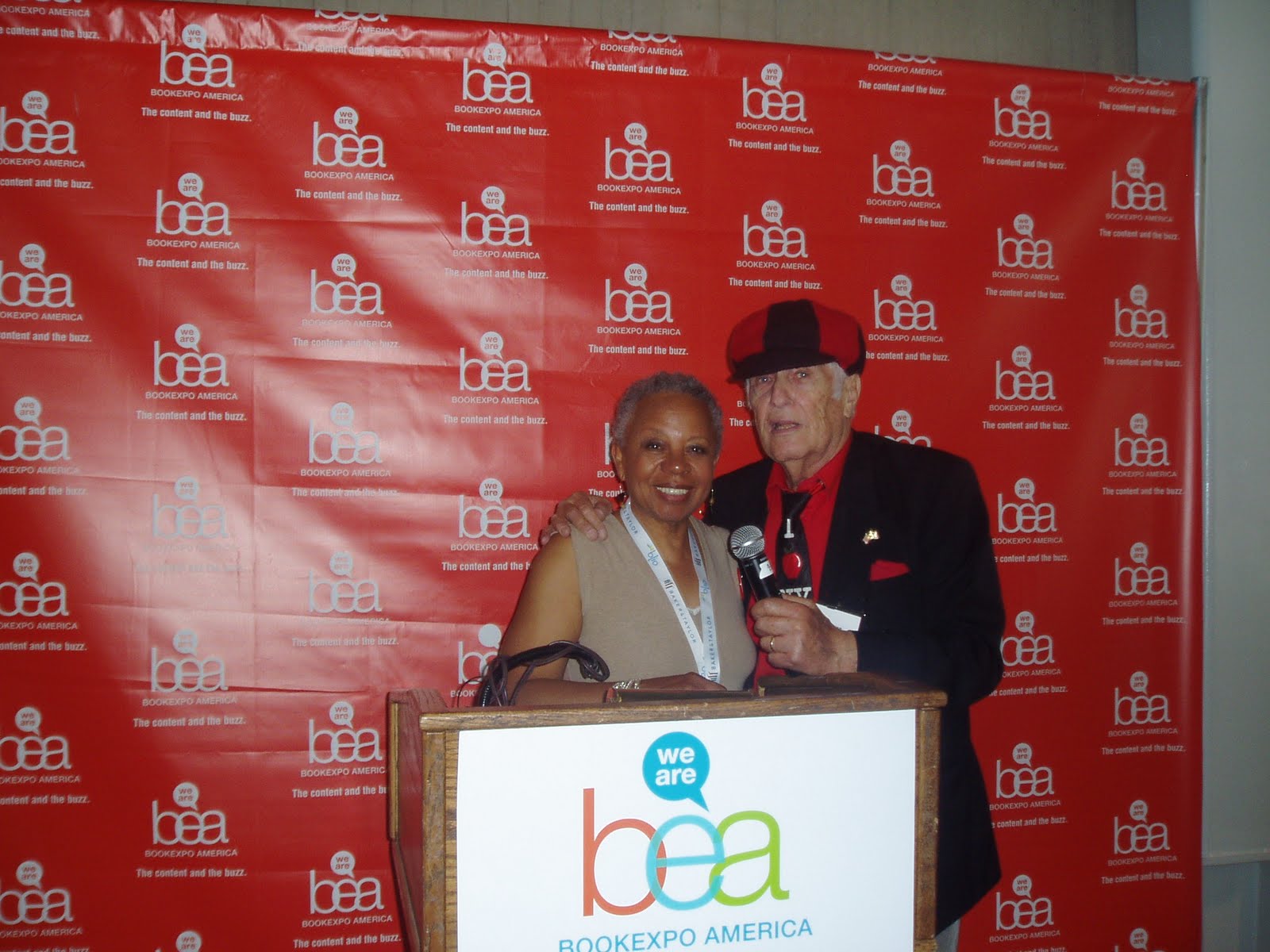
It’s all about the story. That’s the message I heard repeated like a mantra at BookExpoAmerica (BEA) and Blogworld & New Media Expo NY, the huge happening for all things book-related held May
24-26 at New York’s Javits Center.
Publishers, book sellers, authors and some top notch workshop leaders (an estimated 20,000 total attendees) had a lot to say. Michael Margolis broke the storytelling message down most convincingly. His presentation on how to recognize and tell your own story in a way that makes you known and gives value to the reader was full of good info for creating your author, blogger or website bio. http://www.getstoried.com/ and Michael@getstoried.com
I needed no convincing about the importance of story. Back in the day, when Eyewitness News changed the face and presentation of local television news nationwide, I was a general assignment reporter and anchor and had the chance to experience the power of persuasive storytelling first hand. The concept was revolutionary for the news biz then and still resonates despite people who confuse the concept of first hand storytelling with “happy talk” tv news.
When not talking story, folks weighed in on the explosive growth of e-book sales and e-book reading devices. Or debated the pros (mostly) and cons (not many) of social media, a subject about which everybody I met had an opinion. Gary Vaynerchuk, author of The Thank You Economy, takes exception to the term “social media.” More than media, he says that term attempts to describe a cultural shift in the way we use the Internet. http://www.garyvaynerchuk.com/
Malloy book publisher’s exhibit caught my eye http://www.malloy.com/ and Stephanie Barker steph_barker@malloy.com was quick with answers to my questions about self-publishing and books-on-demand.
Thanks to Sandra Lee Schubert http://www.wildwomannetwork.com/, blog radio host, social media strategist and a friend who goes way back with me, I made the most of my time. A veteran of past BEA conferences , she guided me through the myriad of exhibits and workshops, so many they made my head spin.
Finally, think on this: there are 18 million creative writers today who want to reach 65 million consumers who spend five hours a week reading in a rapidly shifting storytelling environment.